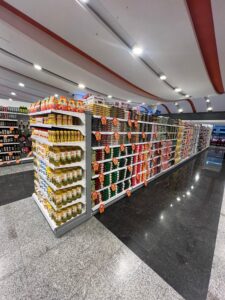
Having limited square footage in a pharmacy does not mean having to compromise on product presentation. The real challenge is to make the most of every available space without overcrowding the environment, restricting movement, or affecting the customer experience.
Today at Promargon, we’ll explore how to optimize small pharmacy spaces through thoughtful commercial fixture planning, strategic layouts, and display solutions that help maintain organization and accessibility.
Make the Most of Vertical Space
When floor space is limited, one of the most effective strategies is to take advantage of available wall and vertical space.
Metal shelving allows pharmacies to use vertical areas to display and organize more products without taking up excessive floor space. However, maximizing height does not mean simply placing products wherever there is room.
It is important to maintain a balanced visual arrangement, organize products by category, and make sure high-priority items are easy to locate and reach.
Prioritize Circulation Within the Pharmacy
A small pharmacy needs a comfortable and functional customer flow. Filling every available square foot with display units may increase product capacity, but it can also make the space feel crowded and difficult to navigate.
For this reason, before installing commercial fixtures, it is important to analyze customer pathways, service areas, and the zones where customers spend the most time.
The layout should allow people to move comfortably while ensuring that staff can access products quickly and without unnecessary obstacles.
Organize Products by Category
In smaller spaces, organization becomes even more important. Grouping related products together allows pharmacies to make better use of their pharmacy shelving while making it easier for both customers and employees to find what they need.
For example, personal care, hygiene, dermocosmetics, and seasonal products can each have clearly defined areas. This reduces visual clutter and allows every section of the pharmacy to serve a specific purpose.
Choose Fixtures Designed for Pharmacy Needs
Not every pharmacy has the same requirements. Commercial fixtures should therefore respond to the types of products being sold, inventory volume, and the way the business operates.
Pharmacy storage cabinets, for example, can help maximize storage space while keeping products organized through multiple drawers and adjustable internal dividers.
A well-designed storage solution can make it easier for staff to locate and retrieve products quickly, even when available space is limited.
Avoid Visual Overcrowding
Optimizing a small pharmacy does not mean displaying every product at once.
A pharmacy overloaded with products, promotional messages, and visual elements can make it harder for customers to identify categories and can cause important products to lose visibility.
The key is to establish priorities: which products need greater visibility, which require quick access, and which can be placed in secondary areas.
Commercial fixtures should function as tools for organization and communication—not simply as places to store merchandise.
Think About Long-Term Flexibility
A pharmacy’s needs can change over time. New product categories, seasonal merchandise, and changes in commercial strategy may require adjustments to the way products are displayed.
Choosing durable and adaptable metal shelving can make future reorganizations easier without requiring a complete replacement of the commercial fixtures.

Optimizing a small pharmacy requires much more than trying to fit as many products as possible into the available space. It is about finding the right balance between display capacity, organization, circulation, accessibility, and customer experience.
Thoughtful commercial fixture planning allows pharmacies to make better use of every available square foot without sacrificing functionality or product presentation.
At Promargon, we design and manufacture high-strength metal shelving, display units, and commercial fixture solutions for pharmacies and other retail businesses, helping each space become more functional, organized, and prepared for the demands of everyday operations.